Last Man
The Ownership Wars: Who Owns YouLast Man is the book’s central image of a diminished humanity: people who value mere survival and comfort more than the will to power, accept domination rather than contest it, and shrink their ambitions until consumption can pass for happiness. The concept joins a critique of class submission to a Nietzschean contrast between the passive masses and the overcoming associated with the Superman, while also becoming a political description of conservatives and supporters of Donald Trump.
Definition and Social Position
The Last Man is defined against the master. The slave values will to life above will to power, whereas the master places power first and cannot endure existing as someone else’s subordinate. In this opposition, the Last Man lacks the force, ambition, and “life spark” required to struggle upward. The book presents the 99 percent as numerically capable of crushing the 1 percent and taking everything the elite possesses, yet unwilling to do so because they prefer relationships, laughter, and the relative ease of being directed to the risks and brutality of domination.
This submission is treated not merely as an externally imposed condition but as an active desire for masters. The 99 percent are said to want others to control their lives and shape their destiny; they do not have the stomach for trampling over other bodies on the way to the top. In the book’s deliberately severe formulation, they are “natural-born slaves,” identified with the Last Men whom Friedrich Nietzsche hated rather than the Supermen whom he admired. Their subordination therefore helps explain the survival of the 1 percent: the ruling minority governs because the majority accepts rule.
Consumption and Manufactured Happiness
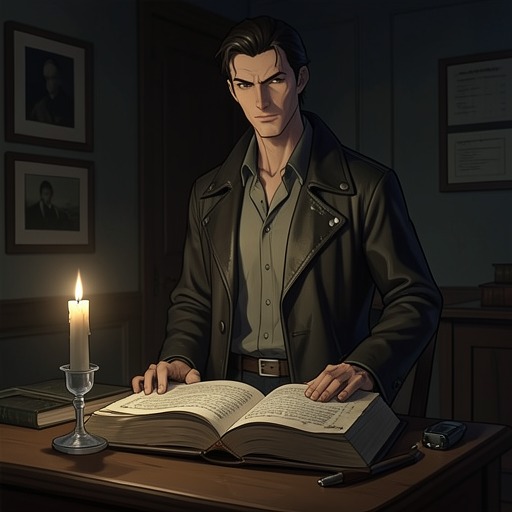
The Last Man’s diminished horizon appears most concretely in consumer capitalism. George Carlin’s comedy about the house as a covered pile of possessions supplies the image: people need a place for their stuff, lock it up against thieves, and eventually move to a larger house because there is no room for more. The book interprets this cycle as the conservative way of life, in which property ownership and material status symbols replace larger purposes.
The Last Man does not simply possess objects; possessions organize existence. A house becomes a storage system, and leaving home to acquire more stuff turns consumption into a self-repeating program. This is why the book identifies Nietzsche’s Last Men with right-wing consumer capitalists. Their apparent freedom is narrowed to the selection of commodities, such as choosing one color of iPhone over another, while the possibility of transforming human beings from “base metals” into “gold” is ignored. Against optimized individual consumption, the book proposes an optimized humanity in which every person, not only the Ownership Class, can develop fully.
Political Choice and Class Illusion
The concept becomes an explicit political binary: Last Men choose Capitalist Democracy, while Supermen choose Meritocracy. Capitalist Democracy is presented as the system in which the majority accepts elite rule and is distracted by manufactured divisions. The book insists that there is only one elite, the 1 percent or Ownership Class, even though political discourse presents liberal and conservative elites as separate forces.
Donald Trump is used as the clearest example of the Last Man’s political confusion. As a member of the billionaire plutocratic elite, he is described as having persuaded tens of millions of right-wing supporters that he is the enemy of the political elite. The book argues that this claim depends on separating the economic elite, which Trump represents, from liberal political and media elites that his supporters oppose. The apparent conflict is therefore treated as a performance that preserves the underlying power of the Ownership Class.
The same structure appears in the discussion of Bernie Sanders’s observation that Trump attracted people who felt abandoned by economic and political elites. The grievance is real in the book’s account, but its direction is manipulated: instead of uniting against the single ruling class, people are presented with a confusing array of conservative, liberal, political, economic, media, corporate, cultural, and other elites. This multiplication of enemies is called divide and rule. The Last Man’s political weakness lies in accepting the spectacle of competing elites rather than recognizing the common class interest beneath it.
The Conservative Revolt
The Last Man’s supposed revolt against the elite is further exposed as a revolt against people placed below him. Conservatives are said not to object to being ruled by a wealthy elite so long as that elite preserves their higher position over non-white people. Donald Trump’s appeals to border restriction, a Wall, police power, and a return to an earlier racial order are interpreted as dog whistles that promise to restore white status over blacks, Hispanics, gays, and women.
This produces a hierarchy within slavery rather than an escape from slavery. Trump’s supporters are described as ardent defenders of the elite, not its opponents; their political demand is parity with, or elevation over, lower-ranked groups rather than the abolition of plutocratic rule. The book calls this the conservative slave revolt: not an uprising against masters, but an attempt by one group of slaves to dominate other slaves. Because a meritocracy of equal opportunity cannot exist while the plutocratic elite remains in power, the Last Man’s admiration for wealth directly blocks the social transformation he might claim to desire.
Nietzschean Image and Narrative Function
The book’s fullest image of the Last Man comes through a quotation from Friedrich Nietzsche. The Last Man asks what love, creation, longing, and a star are, then blinks. The earth has become small; the Last Man makes everything small, seeks warmth, protects health, and accepts minor pleasures for day and night. Above all, the Last Men claim that they have invented happiness and blink.
That repeated blinking is the figure’s defining gesture. It marks a failure of apprehension: the Last Man encounters the largest human questions but cannot sustain attention to them. Greatness is reduced to comfort, creation to possession, and happiness to a manageable daily product. The book extends the image to anarcho-capitalist libertarians, portraying them as small, hopping creatures who fear the “Big Dreams” associated with a Big State and demand small governments and small states with even smaller ambitions.
Donald Trump is finally folded into this imagery. His dream is represented through Trump Tower, golden fittings, a plastic wife and family, a glass-and-plastic skyscraper carrying his golden name, and a plastic people imagining themselves golden and exceptional. The image is intentionally contradictory: the Last Man mistakes the glitter of elite consumption for immortality while remaining spiritually diminished. The concept therefore supplies the book’s governing contrast between a humanity that has invented a small happiness and a humanity willing to pursue knowledge, power, and the transformation of human potential.